October 08, 2026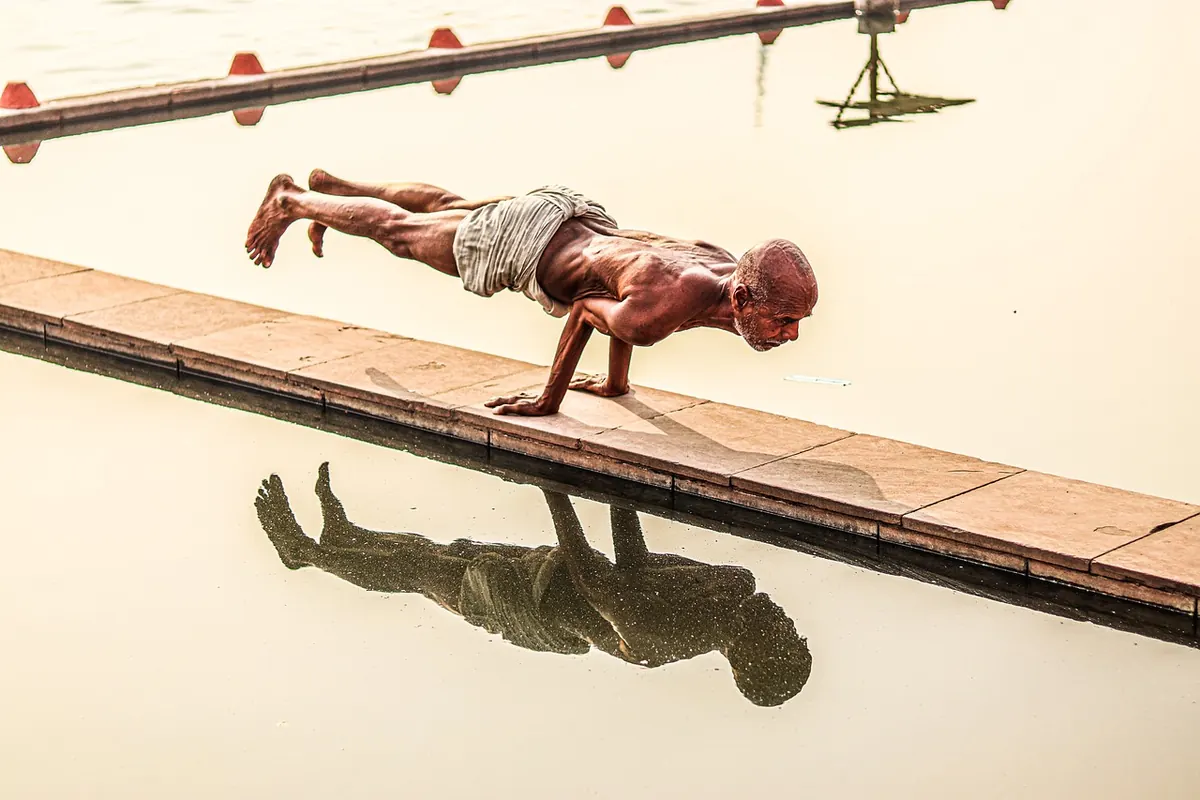
Walking into your first yoga class at a retreat can feel a bit like arriving at a party where everyone already knows the dance. They don't, mostly. Retreat groups are full of people who booked a week away to sleep better, slow down and move more kindly — not to audition for anything. Knowing what actually happens in the room, what to pack and how to look after yourself turns that first class from a source of nerves into the best hour of your day.
What to Bring (and What You Can Leave at Home)
Retreat venues almost always provide mats, blocks, straps, bolsters and blankets, so you rarely need to pack your own kit. If you already own a mat you like, bring it. Don't buy one specially for a week away — check what the venue supplies before you travel.
What genuinely helps:
- Close-fitting, comfortable layers you can move in — leggings or shorts with a t-shirt or vest work well.
- A light jumper or long-sleeved top for the opening breathwork and the final rest, when bodies cool down quickly.
- A water bottle, plus a small towel if you tend to run warm.
- Bare feet are the norm. Socks are fine for seated work; peel them off for standing poses so you don't slip.
- A hair tie, and a notebook if you want to jot down a sequence or a cue that lands.
- Any support you rely on — an inhaler, a wrist strap, a knee brace — and the confidence to use it openly.
- Leave heavy jewellery and strong perfume at home. Neither is comfortable in a warm room.
That's the whole list. No special leggings, no matching mat bag, no prior flexibility required.
Class Etiquette, Without the Awkwardness
Arrive about ten minutes early, especially on day one. Introduce yourself to the teacher and mention that it's your first class. That one sentence changes everything: they will keep half an eye on you, flag the modifications they'd suggest, and won't assume you know the names of the poses.
Shoes come off at the door. Phones stay silent and, ideally, out of the room altogether. If the teacher has arranged mats in a circle, take whatever space is left; if people are spread out, leave a little distance between mats and never step across someone else's. Walking around the edge of the room is always acceptable.
Silence during class is normal, but breathing aloud isn't just allowed — it's encouraged. If a pose feels good, you might hear a room full of people sigh at the same time. That's the point.
Need to leave early? Say so before class starts and position yourself near the door. Slipping out quietly mid-session is fine; clattering out during the final rest is less so. And do stay for that final rest. It isn't padding or a wind-down you can skip — it's the part where the practice settles.
Everyone in that room was once the person who didn't know where to put their mat. Nobody is grading you.
Props Are Not a Beginner's Crutch
A block is not a sign that you can't reach the floor. It moves the floor closer so your shoulders, hips and spine can find the shape of the pose instead of straining towards it. Experienced teachers use props constantly, often more than beginners do.
A quick guide to the common props
- Block — slides under a hand in triangle or a half-moon, or under the hips in seated poses.
- Strap — loops around a foot so you can hold a hamstring stretch without rounding your back.
- Bolster — a firm cylinder or rectangle that supports the knees, the chest or the whole spine in restorative poses.
- Blanket — folded under knees and shoulders, rolled under the neck, or draped over you for the final rest.
- Chair or wall — quiet support for balance poses and standing work when you're tired.
If a teacher is handing props out, take them. If they aren't, fetch one yourself. Reaching for a block mid-class is not an interruption; it's good practice.
Modifications: Your Body Sets the Rules
Most teachers demonstrate the fullest version of a pose, then offer two or three variations. Your job is to choose the one that lets you breathe evenly and stay steady. The fullest version is rarely the right one for everybody in the room, including the teacher on a given day.
Some reliable adjustments: drop the back knee in a low lunge; rest the lower hand on a block in triangle; bend your knees generously in any forward fold; keep your feet wide in standing poses for balance; and treat child's pose as a legitimate place to be when a fast sequence arrives. None of that is a lesser practice.
Ask questions. "How would I make this easier?" and "Is there a version for stiff hamstrings?" are the two most welcome questions a teacher can hear. You won't be the only person wondering.
Tell the teacher before class if you're pregnant, recovering from injury or surgery, or managing a condition such as low back pain or high blood pressure. If you're unsure whether a pose is safe for you, check with your doctor or midwife first. Sharp pain, tingling, numbness or dizziness means stop — that's very different from the warm ache of working muscles.
What a Typical Retreat Class Looks Like
Most sessions open with a few minutes of seated breathing or quiet centring. Then comes a warm-up — cat-cow, shoulder rolls, gentle movement through the spine — before standing poses, balance work and, depending on the teacher, either a stronger flowing sequence or a slower, held practice. Floor work and twists follow. Everything finishes lying down, covered with a blanket, doing nothing at all.
Retreat classes often run sixty to ninety minutes and tend to be gentler than a busy studio class, with more time for breath and fewer instructions per minute. Morning sessions are usually more active; evening ones lean restorative, with longer holds and more props. If a class is described as "dynamic" or "vinyasa", expect more movement and warmth; "yin" or "restorative" means slow and supported.
Your First-Class Checklist
- Check what the venue provides so you pack light.
- Arrive ten minutes early and tell the teacher you're new.
- Take a spot where you can see the teacher and reach the door.
- Collect a block and a blanket before you need them.
- Choose the variation that keeps your breath smooth, not the one that looks impressive.
- Skip anything that hurts, and say so afterwards if you'd like help.
- Stay for the whole final rest — then drink some water.
Turn up curious, use the props, and let the class be as easy as it needs to be. Nobody is assessing your flexibility, and the person on the next mat is far more interested in their own hamstrings than in yours. One class is not a verdict on whether yoga suits you. If a particular teacher's style doesn't click, that's useful information rather than a failure — try another session, or a different pace, before you decide.
Photo: SwastikArora / Pixabay